Best Packing Organizers for Families: A Technical Guide to Travel Logistics
The logistical management of a multi-person household during transit is a task of significant systemic complexity. When moving a family, the objective transcends the simple containment of clothing; it requires the creation of a mobile infrastructure capable of maintaining order, hygiene, and accessibility across diverse environments. Traditional packing methods, characterized by the indiscriminate layering of items within a shared suitcase, inevitably lead to systemic breakdown, where the retrieval of a single essential requires the complete destabilization of the entire pack load.
The transition to high-functioning organizational systems is not a matter of consumer preference but a strategic necessity. By treating the suitcase as a modular environment rather than a singular void, travelers can mitigate the entropy that accompanies long-haul journeys. This approach shifts the focus from “packing” as a finite event to “logistics” as a continuous process, ensuring that the needs of each family member remain localized and independent of the collective burden.
Identifying the tools required for this level of coordination demands a departure from the superficial marketing of “travel accessories.” One must evaluate packing hardware through the lens of durability, weight-to-volume ratio, and mechanical interface. This reference provides the analytical framework necessary to navigate the market for organizational hardware, offering a definitive guide to the systems that transform high-stress family transit into a manageable, predictable, and scalable endeavor.
Understanding “best packing organizers for families.”
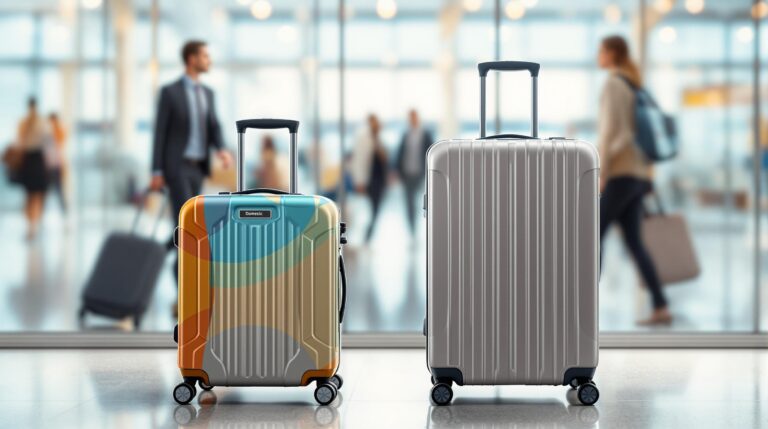
The search for the best packing organizers for families is frequently derailed by the conflation of “organization” with “categorization.” Many users assume that simply segregating clothing into separate pouches constitutes a superior packing strategy. However, without an underlying framework for access and frequency of use, such segregation often creates a complex web of dependencies where one pouch must be opened to access another. The primary risk of oversimplification here is the assumption that all organizational systems are compatible with all luggage types, ignoring the physical geometry of hard-shell versus soft-sided carry-on units.
Furthermore, the selection process is often marred by the aesthetic bias of retail marketing. Systems that emphasize visual uniformity over material performance typically fail when subjected to the mechanical stressors of international transit zipper fatigue, fabric abrasion, and the structural failure of mesh panels. Truly professional family organization relies on a “system-of-systems” approach, where organizers are selected based on their specific utility in isolating high-entropy items such as wet gear, electronics, and hygiene supplies while maintaining the integrity of the primary packing structure.
Deep Contextual Background: The Evolution of Modular Transit
The history of luggage organization is a progression from heavy, rigid compartments to light, flexible, and modular interfaces. In the mid-twentieth century, travel organization was largely restricted to the architecture of the trunk itself, with drawers and partitions being fixed, heavy, and impossible to reconfigure. The rise of the nylon suitcase in the late twentieth century allowed for the emergence of the “packing cube”—a transformative tool that allowed travelers to convert chaotic volumes into distinct, manageable units.
The modern era has seen this evolution accelerate toward specialized, technical fabric applications. We have moved from simple polyester cubes to high-tenacity, siliconized, and waterproof composites. This historical development has changed the role of the traveler from a passive occupant of a suitcase to an active manager of a mobile storage system. Today’s hardware is designed to address the specific needs of families—the need to isolate contamination, the need for rapid deployment in hotel environments, and the need for scalable packing ratios based on the length and nature of the trip.
Conceptual Frameworks and Mental Models
To manage the volume and complexity of multi-person packing, apply these mental models to isolate variables:
The Access-Frequency Model
This framework categorizes all family gear based on the likelihood of needing immediate access.
-
Tier 1 (Instant): Items needed during transit (medications, snacks, documents, electronics).
-
Tier 2 (Daily): Items used at the destination (clothing, basic grooming).
-
Tier 3 (Contingency): Items required only in specific, low-probability scenarios (emergency gear, heavy weather attire).
The limit of this model is “over-compartmentalization,” where the traveler creates so many tiers that the packing process becomes more complex than the journey itself.
The Containment Isolation Framework
This model posits that the family suitcase should be treated like a hazardous material spill zone. It prioritizes the containment of potential failures: liquid leaks, soiled clothing, and damaged electronic components. Organizers are judged not by how much they hold, but by how effectively they shield the rest of the pack in the event of an internal mishap.
The Load-Independent Modularity Model
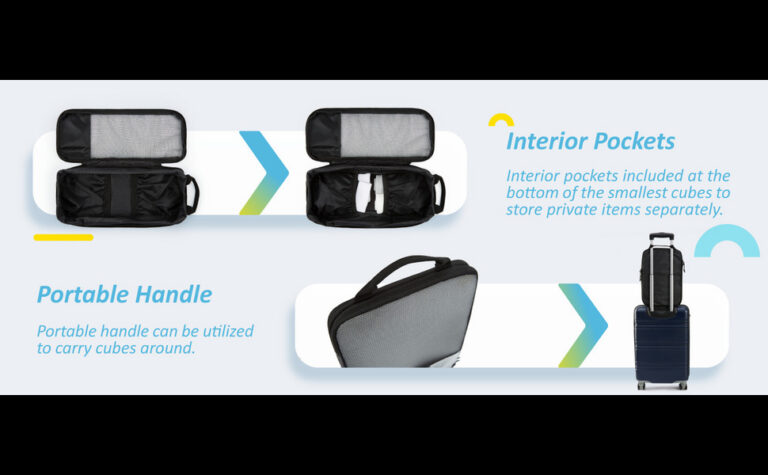
This model requires that an organizational unit be functionally self-sufficient. An ideal packing organizer for a family can be extracted, placed into a hotel drawer, and remain organized without reliance on the external structure of the suitcase. This creates a “plug-and-play” system that streamlines the arrival and departure logistics of any itinerary.
Key Categories and Hardware Variations
To effectively best packing organizers for families—or more accurately, to select them—one must understand the specific engineering behind each category.
| Category | Typical Material | Primary Strength | Ideal Use Case |
| Compression Cubes | High-tenacity nylon | Volume reduction | Apparel (high bulk) |
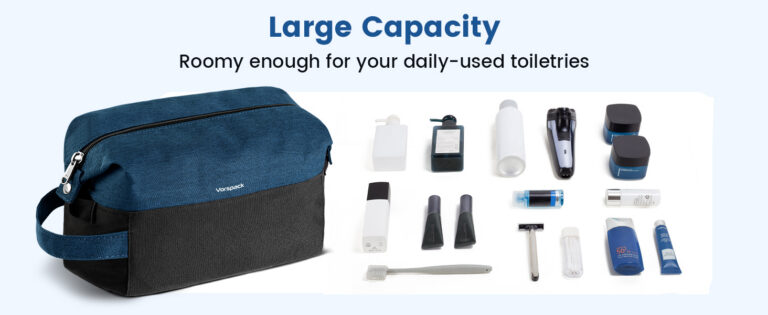
| Clear TPU Pouches | Translucent TPU | Visibility/Liquid safety | Hygiene/TSA/Electronics |
| Mesh-Top Organizers | Ripstop + Mesh | Breathability | Dry-clean clothing |
| Dirty/Wet Bags | Sealed-seam fabrics | Contamination isolation | Soiled/Wet apparel |
Realistic Decision Logic
When building a family organizational system, prioritize the following sequence:
-
Contamination Management: Identify the most likely sources of leakage or mess (hygiene, wet clothing) and assign high-performance, waterproof TPU pouches to these categories.
-
Access Hierarchy: Use mesh-top organizers for standard apparel to ensure breathability and quick visual inventory for child-specific items.
-
Volume Optimization: Reserve compression cubes only for high-volume items (sweaters, coats) to avoid stressing zippers or over-compacting delicate fabrics.
Detailed Real-World Scenarios and Operational Constraints
Scenario 1: The Multi-Leg Transit Node
The family traverses three transit hubs in 24 hours. The primary constraint is the need to access Tier 1 items (electronics, snacks) without opening the main luggage. The solution is an integrated organizational module within the primary backpack or carry-on, independent of the bulk-storage packing cubes.
Scenario 2: The Extended Stay (Hotel/Short-Term Rental)
Upon arrival, the system must translate from a travel state to a “lived-in” state. The decision point is the use of hanging organizers or open-top trays that fit directly into hotel storage. Failure here manifests as the “suitcase sprawl,” a state where family items are scattered, leading to loss and frustration.
Scenario 3: The Contamination Event
A child spills a drink or requires a change due to a travel-induced mess. The constraint is the immediate segregation of the soiled item. Using a dedicated, leak-proof “dirty bag” prevents the transfer of odor or moisture to the remaining clean items in the suitcase.
Planning, Cost, and Resource Dynamics
The implementation of a professional organizational system is an upfront investment that pays dividends in reduced transit stress and hardware longevity.
Comparative Resource Dynamics
| System Complexity | Component Count | Maintenance Load | TCO (Total Cost) |
| Minimalist | 2-3 High-grade units | Low | High Value |
| Standardized | 6-8 modular units | Moderate | Moderate |
| Highly Granular | 12+ units | High | High (diminishing return) |
Tools, Strategies, and Support Systems
The best packing organizers for families are augmented by:
-
Identification Systems: Color-coding cubes by child or by category, ensuring that retrieval is instantaneous even during high-stress scenarios.
-
Extraction Strategy: Using a “system-first” approach where the organizational units are treated as the primary infrastructure, and the suitcase is merely the shell.
-
Routine Maintenance: Periodically auditing the “travel kit” to ensure that damaged or obsolete organizers are removed from the cycle.
Risk Landscape and Compounding Failure Modes
The failure of an organizational system often begins with a zipper. When a packing cube is overstuffed, the zipper teeth are subjected to excessive shear force. If a zipper fails in a shared suitcase, the entire modular system can unravel. The compounding risk is “systemic collapse”: if the organization relies on strict compartmentalization, the loss of one organizer can mean the loss of an entire category of gear (e.g., all underwear for one child), rendering the packing system brittle.
Governance, Maintenance, and Long-Term Adaptation
Treating your organizational kit with a systematic approach ensures long-term viability.
-
Audit Cycles: Every six months, evaluate the efficacy of the current cube configuration.
-
Sanitization: Periodically wash fabric components to remove accumulated grit and body oils.
-
Adaptation Triggers: When a child’s needs shift (e.g., switching from diapers to clothing), reassess the organizational volume required for that family member to prevent the “legacy container” problem,m where containers are kept despite being functionally redundant.
Measurement, Tracking, and Evaluation
-
Leading Indicators: Time required to retrieve an item (Target: <10 seconds); total weight variation between departure and return.
-
Lagging Indicators: Frequency of missing items; incidence of spill-related damage; reported stress levels during the packing process.
Common Misconceptions and Oversimplifications
-
“One size fits all.” Luggage geometry dictates the optimal cube size; forcing a standard set into an irregular suitcase often results in wasted space.
-
“Plastic bags are just as good.” While they offer moisture protection, they lack the structural integrity for repeated use and generate excessive waste.
-
“More compartments mean more organization.” Excessive compartments often lead to “forgotten items”—gear hidden in pouches that are rarely opened.
-
“All zippers are created equal.” A failure-prone zipper is the single most common reason for a system-wide breakdown in travel.
Ethical, Practical, and Contextual Considerations
The global travel industry produces significant waste, and the organizational gear market is no exception. Ethical consumption in this category involves prioritizing repairable systems and durable materials that resist the “disposable travel accessory” trap. By investing in modular, high-performance organizers, a family reduces its long-term ecological footprint and supports manufacturers that emphasize longevity.
Strategic Synthesis
Mastering family transit is an exercise in managing order amidst the chaos of travel. The best packing organizers for families are those that operate invisibly, providing structure and security without adding unnecessary complexity to the logistical chain. By prioritizing modularity, structural integrity, and a clear access hierarchy, families can transform their packing process from a high-entropy struggle into a calibrated, professionalized operation. The true measure of an organizational system is its ability to facilitate the family’s journey while ensuring that every member’s needs are met with precision and predictability.