Compare Hardside Luggage Options: The Engineering Guide to Durability
The modern traveler’s reliance on rigid-shell containment represents a fundamental shift in logistics. While soft-sided fabrics offer a certain utilitarian flexibility, the transition toward polycarbonate, aluminum, and advanced composite shells has redefined the standards for equipment protection in transit. This evolution is not merely aesthetic; it is a response to the increasingly automated, high-velocity nature of contemporary luggage-handling infrastructure, where static loads must withstand significant compressive force, localized impacts, and the abrasive hazards of conveyor-based sorting systems.
Developing a strategy to effectively choose and utilize these vessels requires moving beyond surface-level consumer marketing. One must consider the precise interplay of polymer density, frame rigidity, and the mechanical tolerances of omnidirectional wheel assemblies. When professionals set out to compare hardside luggage options, they are not simply selecting a color or a brand profile; they are evaluating the structural viability of an asset intended to serve as a secure, mobile environment for sensitive professional and personal equipment.
To establish true authority on this subject, this reference decomposes the manufacturing processes, the taxonomy of materials, and the systemic failure modes that characterize rigid-shell transit hardware. It provides an exhaustive, engineering-focused examination of how different shells respond to dynamic environmental stressors. By focusing on the structural realities of design rather than the transient trends of the luggage industry, this analysis serves as a cornerstone for those who require definitive technical clarity in their travel infrastructure.
Understanding “compare hardside luggage options.”
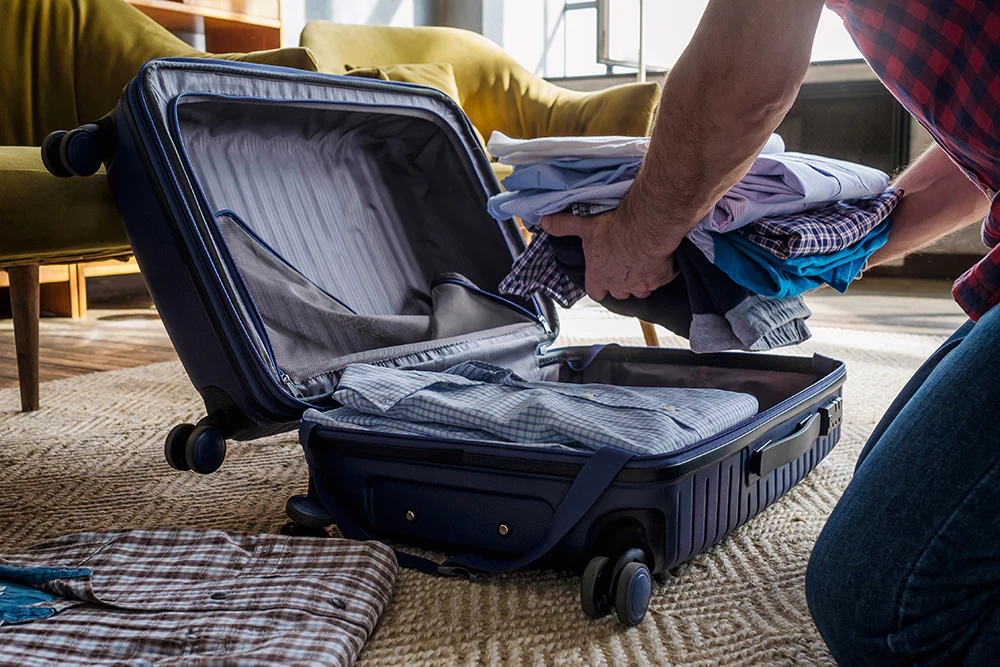
The process to compare hardside luggage options is frequently undermined by a lack of technical standardization. Many users approach the category with the assumption that rigidity equates to indestructible protection. This perspective is inherently flawed. A rigid shell is a protective buffer, but its performance is dictated by the specific material’s ability to deflect energy rather than absorb it through brittle fracture. An effective comparison must weigh the specific properties of materials, such as virgin polycarbonate versus ABS blends, against the intended operational environment.
A common point of oversimplification is the focus on the shell material while ignoring the “chassis-to-shell” interface. The point at which the telescopic handle and wheel housings meet the shell is the primary point of structural failure. When practitioners work to compare hardside luggage options, they must scrutinize these junction points. A high-quality shell is often rendered useless by mounting hardware that lacks internal reinforcement plates. Therefore, true topical mastery requires an understanding of how these components are integrated, how they distribute stress across the frame, and the thermodynamic implications of the materials used in those assemblies.
Deep Contextual Background: The Evolution of Rigid Containment
The history of the rigid suitcase is a chronicle of material science breakthroughs. Early hard-sided trunks utilized plywood or vulcanized fiber, which were durable but prohibitively heavy. The mid-twentieth-century introduction of ABS (acrylonitrile butadiene styrene) allowed for lighter, molded shells, but these early polymers were notoriously brittle in cold-weather conditions, often shattering under impact.
The turning point occurred with the widespread adoption of polycarbonate. This thermoplastic polymer introduced the concept of “elastic recovery,” where the shell flexes under extreme pressure, such as being crushed at the bottom of a container, and returns to its original shape without cracking. More recently, the industry has shifted toward multi-layered composite shells and aluminum-magnesium alloys, reflecting a desire to achieve extreme rigidity and aesthetic minimalism. Understanding this progression allows the analyst to see that today’s designs are not just products of fashion, but results of ongoing experiments in mass-energy distribution and impact mitigation.
Conceptual Frameworks and Mental Models
To organize the technical data inherent in rigid-shell design, specific mental models are required to isolate variables and predict performance.
The Impact Deflection Model
Luggage shells function as energy-dissipation surfaces. This model suggests that the best designs use geometry—such as horizontal ribs, diamond textures, or concave curves—to “stiffen” the panel without adding mass. The limit of this model is the “oil-canning” effect, where overly flexible panels can deform permanently if the energy deflection exceeds the material’s elastic limit.
The Joint-Integrity Framework
This model categorizes a suitcase by its points of attachment. It focuses on the reality that a shell is only as strong as the rivets, screws, and internal brackets that connect the wheels and handles. It posits that a 100% polycarbonate shell is meaningless if the wheel housing is anchored into the material without a backing plate to distribute the force.
The Weight-to-Structural-Ratio Model
This model assesses the engineering efficiency of a design. It forces a comparison between the shell’s thickness and the resulting internal volume. An overly heavy aluminum case may provide superior security, but it may also be functionally inferior to a polycarbonate design that maintains equivalent structural integrity while allowing for 15% higher load-carrying capacity.
Key Categories and Hardware Variations
To effectively compare hardside luggage options, one must categorize them based on the material science and assembly techniques that define their structural limits.
| Category | Primary Material | Mechanical Property | Failure Mode |
| Virgin Polycarbonate | High-grade PC | Elastic recovery | Scuffing / Surface abrasion |
| Recycled PC / ABS Blend | Composite | Moderate stiffness | Brittle fracture under stress |
| Aluminum-Magnesium | Metal Alloy | High rigidity / Impact resistance | Permanent denting / Frame warp |
| Curv (Woven Polypropylene) | Multi-layered weave | Energy absorption | Delamination over time |
Realistic Decision Logic
When evaluating options, planners should follow a hierarchical elimination process:
-
Operating Environment: Are you moving through high-density urban environments with smooth floors, or are you moving through transit nodes with irregular surfaces? If the latter, focus on wheel-well recess depth.
-
Cargo Sensitivity: Are you transporting fragile instrumentation? If yes, rigidity and internal modularity take precedence over external weight.
-
Weight Constraints: Are you bound by strict airline weight limits? If so, prioritize virgin polycarbonate, which offers the best strength-to-weight ratio.
Detailed Real-World Scenarios and Operational Constraints
Scenario 1: Inter-Modal High-Frequency Transit
The user transitions between train platforms and terminals on a weekly basis. The constraint here is the mechanical wear of the wheels. When users compare hardside luggage options for this use case, they often find that shells with recessed, low-profile wheels perform significantly better in long-term deployment than those with protruding, exposed spinners that are vulnerable to shearing forces in narrow transit aisles.
Scenario 2: The Security-Critical Deployment
The user transports equipment that requires a high level of physical deterrence. Aluminum shells with frame-latch systems (rather than zippers) are the standard. The constraint here is not weight, but the inability for a third party to gain quick, surreptitious access to the interior. The decision point is the latch mechanism’s security rating and the quality of the seals.
Scenario 3: Extreme Climate Field Work
The equipment is deployed in regions with temperatures ranging from sub-zero to desert heat. ABS blends are eliminated immediately due to their tendency to crack at low temperatures. A high-grade polycarbonate shell with a textured surface to mask thermal expansion scratches is the only viable option.
Planning, Cost, and Resource Dynamics
The implementation of an asset-based travel strategy involves understanding the total cost of ownership (TCO) over a typical 10-year lifespan. Low-cost shells often require replacement every 18 months, leading to a high cumulative expense.
Cost-Efficiency Table
| Material Type | Estimated Useful Life | Maintenance Frequency | TCO Assessment |
| ABS Blend | 1–2 Years | Low (High failure rate) | Poor |
| Virgin Polycarbonate | 5–8 Years | Moderate | High Value |
| Aluminum | 10+ Years | High (Dent repair/hinge) | Premium Investment |
| Advanced Curv | 7–9 Years | Low | High Efficiency |
Tools, Strategies, and Support Systems
A reliable long-term luggage protocol integrates specific tools for maintenance and performance:
-
Tension Gauges: Used to check for handle integrity and fastener tightness before major deployments.
-
Component Kits: Maintaining a supply of proprietary replacement wheels and handles that are compatible with the specific suitcase chassis.
-
Non-Destructive Inspection: Periodically examining shell seams for micro-fractures before they propagate into major structural failures.
-
Interior Partitioning: Using hard-shell internal dividers to reinforce the shell from within, preventing inward buckling during crushing events.
Risk Landscape and Compounding Failure Modes
The failure of a rigid shell is often a compounding issue. It typically begins with a minor crack near a rivet. If ignored, this crack propagates, distributing stress unevenly to the neighboring fasteners. This creates a “domino effect” where the shell’s structural integrity is compromised globally. A critical aspect of risk management is the realization that zippers, the most common point of failure, are not just fasteners but structural elements; if a zipper track is damaged, the entire rigidity of the bag is lost.
Governance, Maintenance, and Long-Term Adaptation
To effectively compare hard-side luggage options, one must plan for their eventual maintenance.
-
Quarterly Inspections: Evaluate the integrity of the shell and the function of the telescoping handle locks.
-
Lubrication Cycles: Use silicone-based lubricants on wheel bearings and handle tracks to minimize friction and prevent premature wear.
-
Review Cycles: Every two years, evaluate the current performance of the asset against updated airline baggage handling protocols or weight restriction changes.
Measurement, Tracking, and Evaluation
A serious traveler maintains logs to track equipment health.
-
Leading Indicators: Smoothness of handle retraction, resistance of the wheel rotation, and the structural “ping” of the shell when tapped.
-
Lagging Indicators: Total weight of cargo carried relative to manufacturer recommendations, number of handling incidents, and total miles traveled.
Common Misconceptions and Oversimplifications
-
“The thicker the shell, the better.” Excessive thickness adds weight without necessarily improving impact resistance; distribution geometry is more important.
-
“Zippers are weak, latches are strong.” A well-engineered zipper track is actually more capable of absorbing impact without permanent deformation than a rigid aluminum latch frame.
-
“Polycarbonate is all the same.” There is a vast difference between virgin, industrial-grade polycarbonate and cheap ABS-recycled blends.
-
“Four wheels are always better than two.” In environments with rough terrain, two-wheeled configurations with larger wheel diameters are significantly more reliable than four-wheel spinners.
Ethical, Practical, and Contextual Considerations
The luggage industry is a significant contributor to global plastic waste, with millions of low-quality, disposable cases ending up in landfills annually. An ethical travel strategy prioritizes repairability. When choosing, prioritize brands that offer modular components and a long-term parts supply chain, as this effectively extends the life of the product and reduces the environmental footprint of frequent travel.
Strategic Synthesis
The challenge to compare hardside luggage options concludes not with the selection of a single product, but with the adoption of a technical standard for the equipment one carries. By prioritizing structural integrity, modularity, and material-specific maintenance, the traveler ensures that their gear is a support system, not a liability. Ultimate authority in this category is gained by understanding that rigidity is not the goal; the goal is energy management. The most resilient containers are those that effectively distribute the forces of transit, protect the integrity of the contents, and facilitate an adaptive, long-term operational lifespan.