Best Carry-On Luggage Options: A Complete Engineering & Travel Guide
The global aviation ecosystem operates as a highly optimized, high-friction environment where passenger comfort directly intersects with strict institutional constraints. Within this matrix, the luggage a traveler brings into the aircraft cabin is not merely a container for personal effects, but a critical interface between individual mobility and commercial logistics. Choosing the optimal baggage configuration requires balancing material science, airline regulatory frameworks, physical ergonomics, and the unpredictable realities of modern transit hubs.
For the frequent traveler, the selection process extends far beyond aesthetic preference or brand prestige. It demands an understanding of how distinct baggage architectures perform under stress, whether that stress takes the form of a cramped overhead bin on a regional turboprop, the abrasive handling of an unexpected gate-check, or the long-distance foot transit required by sprawling international terminals. The market is saturated with superficial designs that prioritize marketing narratives over mechanical integrity, making a systematic, analytical approach to baggage selection essential.
Understanding “best carry-on luggage options.”
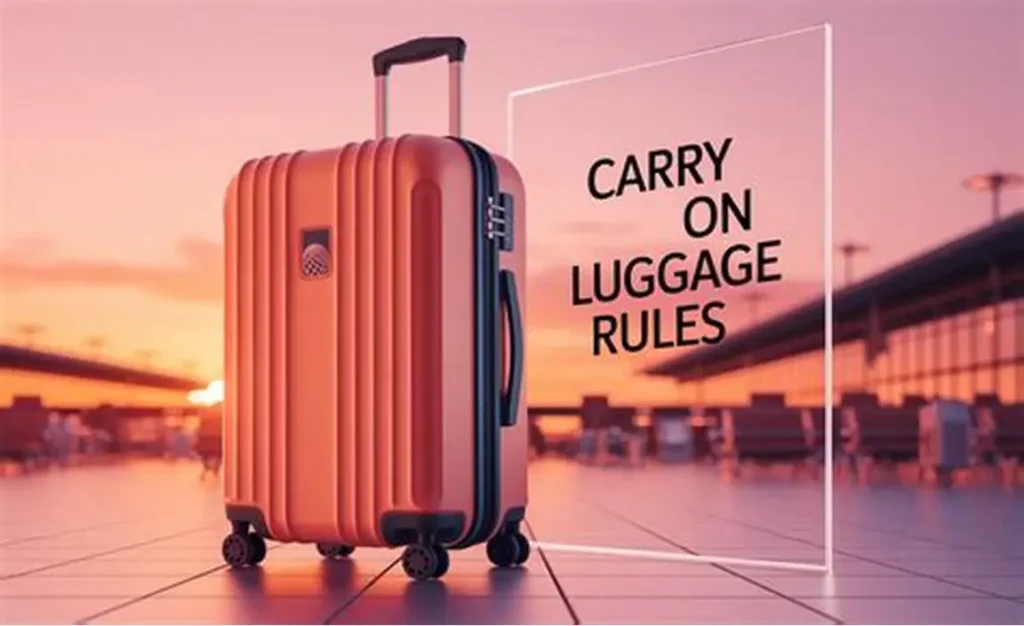
The phrase “best carry-on luggage options” is frequently reduced to a static list of popular consumer products. However, from an analytical perspective, a truly optimal baggage solution cannot exist in a vacuum. The ideal configuration is inherently contingent on a dynamic set of variables: the traveler’s physiological capacity, the specific regulatory constraints of the operating air carriers, the geographic and environmental realities of the destination, and the duration and nature of the itinerary.
When evaluating the market, consumers regularly fall prey to the optimization paradox. In attempting to maximize internal volume, they often select baggage that exceeds the physical dimensions allowed by strict gate agents or regional overhead bins. Conversely, prioritizing ultra-lightweight materials can result in a structural compromise, where the frame fails under full load or the textile tears when subjected to the sharp metallic edges common in airport infrastructure.
The Evolution of the Cabin Environment: A Historical Perspective
The contemporary cabin baggage landscape is the direct result of decades of economic, regulatory, and technological shifts within the commercial aviation industry. For the first several decades of commercial flight, baggage was overwhelmingly stowed in the aircraft hold. Cabins were designed for passenger seating and minimal personal items, such as coats or small briefcases. The overhead compartments of the mid-20th century were open racks, structurally incapable of retaining heavy items during turbulence and legally restricted to lightweight garments.
The paradigm shifted fundamentally in the late 1980s with the invention of the Rollaboard by commercial airline pilot Robert Plath. By appending two wheels and a retractable towing handle to a vertically oriented suitcase, Plath fundamentally altered human transit. This mechanical innovation coincided with the deregulation of airlines, which catalyzed a shift toward hub-and-spoke networks, increased flight densities, and accelerated connection windows. Passengers quickly realized that bypassing the checked baggage carousel allowed them to mitigate the risks of lost luggage and drastically reduce total transit time.
In the twenty-first century, two major systemic shocks further transformed cabin baggage dynamics:
The Post-2006 Security Paradigm
The implementation of strict liquid volume restrictions and enhanced electronic screening protocols mandated that passengers maintain rapid access to the interior of their luggage. Baggage architecture had to adapt, giving rise to dedicated exterior pockets, accessible laptop sleeves, and split-compartment designs that minimized disclosure times at security checkpoints.
The Unbundling of Ancillary Fees
Following the financial pressures of the late 2000s, commercial airlines globally unbundled their pricing structures. Checking a bag became a distinct profit center for carriers. This economic disincentive drove a massive influx of passengers attempting to consolidate all cargo into the cabin. In response, ultra-low-cost carriers (ULCCs) introduced secondary restrictions, creating a sharp division between “carry-on baggage” (destined for the overhead bin) and “personal items” (restricted to the under-seat void).
Today, aircraft manufacturers like Boeing and Airbus actively design cabins around baggage constraints, introducing pivoting bins and oversized overhead compartments. Concurrently, luggage manufacturers engage in an engineering arms race, utilizing aerospace-grade polymers and complex internal geometries to maximize every square millimeter of allowable space within a shifting landscape of global aviation enforcement.
Conceptual Frameworks for Baggage Evaluation
To objectively analyze the market, travelers can utilize specific mental models derived from industrial design, logistics, and physics. These frameworks prevent emotional purchasing decisions and ground baggage selection in measurable performance criteria.
1. The Volume-to-Weight Efficiency Index (VWEI)
This framework evaluates how much packable space a piece of luggage delivers relative to its unladen weight. The mathematical relationship can be expressed as:$$\text {VWEI} = \frac{\text{Internal Volume (Liters)}}{\text{Unladen Weight (Kilograms)}}$$ An optimal VWEI is critical when flying on international carriers that enforce strict 7kg (15.4 lbs) or 10kg (22 lbs) cabin weight limits. A heavy aluminum suitcase may offer immense structural protection, but if its unladen weight is 4.5kg, it leaves the traveler with a functional capacity of just 2.5kg for their belongings, rendering the configuration highly inefficient under weight-constrained regimes. When searching for the best carry-on luggage options, maximizing this ratio is paramount for compliance without sacrificing gear capacity.
2. The Spatial Footprint Maximization Model
Aviation authorities measure luggage via three-dimensional linear limits (typically $H \times W \times D$, such as $22 \times 14 \times 9\text{ inches}$ or $55 \times 40 \times 20\text{ cm}$). The Spatial Footprint Maximization Model analyzes how closely a bag’s exterior geometry approaches a perfect rectangular prism while accounting for component protrusions. Soft-sided bags with heavily rounded corners or hardshell cases with prominent external wheel housings sacrifice substantial volume at the perimeter. A hard-edged, boxier geometry maximizes the internal volume within the strict spatial box enforced by airline baggage sizers.
3. The Kinetic Displacement and Ergonomic Strain Model
This model examines the energy expenditure required to move luggage across varied terrain over time. It contrasts the two-wheeled “roller” architecture (which requires the user to support a portion of the bag’s weight and drag it at an angle) with the four-wheeled “spinner” architecture (which distributes the weight entirely across four vertical axes on flat ground). The framework analyzes how these systems perform when transitioning across high-friction surfaces, such as deep terminal carpeting, cobblestone streets, or train platform gaps, measuring the structural strain transferred to the traveler’s wrist, elbow, and shoulder.
Taxonomy of Cabin Baggage: Structural Categories and Trade-offs

The modern marketplace for cabin baggage can be classified into distinct structural typologies. Each category embodies a specific set of engineering trade-offs that make it ideal for certain environments while introducing distinct vulnerabilities in others.
1. Hard-Sided Polycarbonate / ABS Configurations
Polycarbonate is an amorphous thermoplastic characterized by high impact resistance, optical clarity, and thermal stability. High-grade polycarbonate can deform under pressure and flex back to its original shape without fracturing. Conversely, Acrylonitrile Butadiene Styrene (ABS) is a cheaper, more rigid polymer blend that is significantly more prone to stress cracking under impact.
-
Trade-offs: These cases offer superior protection against crushing forces and moisture infiltration, but lack external organizational pockets and cannot deform to accommodate over-packing.
2. Hard-Sided Aluminum-Magnesium Alloy Configurations
Representing the premium tier of structural durability, these cases utilize high-strength aluminum alloys configured with riveted frames and dual-latch locking mechanisms instead of traditional zippers.
-
Trade-offs: They provide unparalleled security against theft and structural destruction. However, they carry a massive unladen weight penalty, possess zero elasticity, and show permanent denting and scratching from high-impact encounters.
3. Soft-Sided Ballistic Nylon / Cordura Configurations
Ballistic nylon is a thick, tough synthetic nylon fabric originally developed by the DuPont corporation for military flak jackets. It features a basketweave pattern that provides extreme resistance to abrasion and tearing. Cordura utilizes texturized nylon fibers that offer excellent abrasion resistance but are slightly more prone to snagging than high-denier ballistic weaves.
-
Trade-offs: Soft-sided bags excel at external organization, often featuring multiple front pockets, and can compress into tight overhead bins. Their main drawback is vulnerability to severe weather and a lack of interior impact protection.
4. Hybrid Technical Carry Systems (Convertible Backpacks)
Bridging the gap between traditional luggage and outdoor gear, these systems utilize high-performance laminated textiles (such as X-Pac or Dyneema) combined with concealable harness systems. They are designed for maximum mobility, allowing the user to seamlessly switch between wheeled transport and hands-free carry.
-
Trade-offs: Highly versatile across rough terrain and strict regional flight configurations, but they transfer the entire weight load directly to the user’s musculature and lack the structural protection of a rigid shell.
5. Polypropylene Frameless Casework
Polypropylene represents the lowest density of all commodity plastics, making it exceptionally lightweight. It exhibits high flexural fatigue resistance, meaning it can withstand repeated bending and flexing without cracking.
-
Trade-offs: It provides one of the best unladen weights available in the hardshell realm. However, it is highly susceptible to superficial scratching and UV degradation if exposed to prolonged sunlight during tarmac transfers.
| Baggage Typology | Primary Material | Average Unladen Weight | Impact Resistance | Volumetric Flexibility | Security Level |
| Premium Polycarbonate | 100% Virgin Polycarbonate | Low to Medium (2.0–3.2 kg) | High (Flexible deflection) | Low (Fixed perimeter) | Medium (Zipper dependent) |
| Aluminum Alloy | Aircraft-grade Aluminum | High (4.0–5.5 kg) | Extremely High (Structural) | Zero | High (Latch & Frame system) |
| Ballistic Nylon | 1050D/1680D Nylon | Medium to High (3.0–4.5 kg) | Moderate (Pads contents) | High (Fabric elasticity) | Low to Medium |
| Technical Backpack | Sailcloth / Laminated Nylon | Extremely Low (0.9–1.8 kg) | Low | High (External compression) | Low (Exposed zippers) |
| Polypropylene | High-Flex Polypropylene | Extremely Low (1.8–2.5 kg) | High (Pliable) | Low | Medium |
| Waxed Canvas | Heavy Cotton Canvas | Medium (2.5–3.8 kg) | Low | High (Malleable) | Low |
| Carbon Fiber | Carbon Composite | Ultra-Low (1.5–2.2 kg) | Very High (Rigid) | Zero | High |
Realistic Decision Logic
When navigating these options, travelers must deploy a binary elimination strategy. If an itinerary involves strict international weight limits (e.g., intra-Asia or intra-Europe low-cost carriers), aluminum and heavy ballistic nylon options must be excluded immediately based on VWEI constraints. If the itinerary requires moving through rain-heavy environments or utilizing open-air marine transit (such as ferries between islands), soft-sided nylon configurations should be deselected to protect internal contents from moisture ingress.
Real-World Operational Scenarios and Failure Modes
To understand how these systems function in practice, we must examine their performance across specific travel profiles. Each scenario introduces distinct environmental strains that test the limits of baggage design and help define the best carry-on luggage options for individual requirements.
The Multi-Modal Intercontinental Commute
-
Profile: A flight from Chicago O’Hare to London Heathrow, followed by a transition to the London Underground, ending with a half-mile pedestrian transit over historic cobblestones.
-
Dynamics: This itinerary demands a high-capacity bag that conforms to international wide-body overhead dimensions. The primary stressor here is the transition from smooth terminal floors to high-vibration outdoor surfaces.
-
Failure Mode: A four-wheeled spinner with small, hard-compound polyurethane wheels will experience extreme vibrational feedback. This can cause structural fatigue in the wheel housing or failure of the internal telescoping handle rivets. The high friction of cobblestones forces the user to drag the spinner on two wheels, accelerating asymmetric wheel wear.
-
Optimal Choice: A soft-sided, two-wheeled roller with large, shock-absorbing rubber wheels and a heavy-gauge ballistic nylon exterior that can handle scraping against concrete curbs.
The Regional Multi-Leg Turboprop Circuit
-
Profile: Successive flights within a domestic network using Bombardier CRJ-200 or Embraer 145 regional jets.
-
Dynamics: These aircraft feature highly restricted overhead bins that cannot accommodate standard $22 \times 14 \times 9\text{ inch}$ rollers. Passengers are routinely forced to gate-check their bags via “valet tagging,” exposing the luggage to manual tarmac handling and inclement weather.
-
Failure Mode: A premium aluminum or pristine polycarbonate spinner gate-checked in this environment is subject to high-impact drops from the cargo door to the tarmac cart. Protruding spinner wheels are easily sheared off during automated sorting or manual stacking.
-
Optimal Choice: An under-seat compliant technical backpack or an ultra-streamlined, soft-sided personal item bag. If a wheeled bag is mandatory, a two-wheeled recessed-wheel configuration maximizes the chances of fitting into the small overhead bins, bypassing the gate-check entirely.
The High-Security Executive Transit
-
Profile: Rapid transitions between corporate environments, train stations, and hotels across multiple international financial hubs.
-
Dynamics: Speed at security checkpoints and professional appearance are paramount. The luggage must serve as a mobile workstation interface, allowing rapid access to laptops, passports, and secure documents without exposing packed clothing.
-
Failure Mode: A traditional clamshell hardshell case requires the user to lay the entire bag flat on the floor or a bench to open it. This exposes internal contents to public view and slows down security screening lines.
-
Optimal Choice: A polycarbonate or hybrid case featuring an integrated, hard-front asymmetrical opening or a dedicated, padded exterior tech compartment with a reinforced organizational panel.
The Remote Field Research Itinerary
-
Profile: Flight transit to a developing equatorial hub, followed by overland travel in non-climate-controlled vehicles and light unpaved pedestrian transit.
-
Dynamics: High humidity, pervasive fine dust, and absent paved infrastructure. The baggage will be thrown onto vehicle roofs, subjected to monsoon rains, and manually hoisted repeatedly.
-
Failure Mode: Intricate telescoping handles will quickly ingest fine silt, causing the locking pins to jam permanently. Zippers without protective storm flaps will experience high friction from grit ingress, stripping the teeth. Spinner wheels will sink into mud or soft gravel, rendering them useless as dragging anchors.
-
Optimal Choice: A frameless, heavy-duty TPU-coated duffel or technical backpack featuring welded seams and oversized YKK molded zippers.
Planning, Cost, and Resource Dynamics
The financial evaluation of cabin baggage requires shifting from an acquisition-cost mindset to a Total Cost of Ownership (TCO) framework. A low-cost consumer suitcase ($50–$100) often exhibits a high failure rate within 24 to 36 months of frequent use, resulting in recurrent replacement costs, potential baggage fee penalties, and the catastrophic cost of a mid-journey mechanical failure.
Amortization and Component Lifespan
A premium industrial-grade piece of luggage ($500–$900) backed by an unconditional lifetime warranty amortizes efficiently over a long time horizon. If a traveler conducts 50 flight segments per year over ten years (500 segments), a $500 bag yields a capital expenditure cost of $1.00 per segment. Conversely, purchasing three $150 budget bags over the same period due to wheel or zipper failures yields a higher total outlay ($450) without the ancillary benefits of premium material performance, superior ergonomics, or brand support.
Direct and Indirect Financial Metrics
Gate-check penalties are an important variable in this equation. Ultra-low-cost carriers often charge penalty fees ranging from $50 to $100 if a carry-on bag exceeds dimensional limits at the boarding gate. A bag that is too large can incur its entire original purchase value in penalty fees over just two or three non-compliant flights. Consequently, investing in one of the precisely engineered best carry-on luggage options configured for strict international dimensions becomes a direct cost-mitigation strategy.
| Cost & Value Tier | Price Range (USD) | Expected Lifespan (Segments) | Key Material / Componentry | Financial Vulnerability Risks |
| Budget / Mass Market | $40 – $120 | 20 – 50 | ABS Plastic, Low-denier Polyester, Unbranded Zippers | High risk of gate fees; terminal failure of zipper teeth; wheel housing cracking under load. |
| Mid-Tier Consumer | $150 – $350 | 100 – 250 | Virgin Polycarbonate, 840D Nylon, YKK Zippers, Double Spinners | Moderate risk of handle housing looseness; zipper tape fraying over time. |
| Premium Executive | $400 – $700 | 500 – 1000+ | Ballistic Nylon, Pure Polycarbonate, Proprietary Wheels | High unladen weight penalties on specific models; upfront capital allocation. |
| Industrial / Luxury | $800 – $1,500+ | 1000+ (Lifetime) | Machined Aluminum, Premium Carbon Fiber, Custom Components | Weight constraints, aesthetic targeting for theft; high initial cost entry barrier. |
Tools, Strategies, and Support Systems
Maximizing the utility of top carry-on luggage options requires treating the internal volume as a structured logistical space. Randomly placing garments into a suitcase creates air pockets and inefficient weight distribution, which undermines the engineering advantages of a well-designed bag.
The Interlocking Modular Packing Method
Rather than treating clothing as individual items, travelers should view them as modular units within a geometric grid. This approach relies on packing cubes constructed from lightweight, high-tensile fabrics like silnylon or ripstop polyester.
By segregating items into distinct spatial cubes, the traveler compresses air out of the fabric and creates uniform blocks that align perfectly with the square interior lines of the suitcase.
Weight Distribution Dynamics
The center of gravity of a packed carry-on bag profoundly impacts its stability and maneuverability.
-
For Four-Wheeled Spinners: Heavy items (shoes, tech cases, secondary density kits) should be packed at the bottom of the bag, directly above the wheel assembly. This lowers the center of gravity, preventing the suitcase from tipping over when rolling across transitions or carpeted surfaces.
-
For Two-Wheeled Rollers and Backpacks: High-density items should be positioned along the structural spine of the bag, as close to the handle or the traveler’s back as possible. This minimizes the leverage arm force transferred to the user’s arm or core muscles during transport.
1. High-Density Compression Modules
Utilizing double-zipper systems, these specialized cubes compress internal contents by mechanically forcing out trapped air. This allows a 30% reduction in physical volume for soft garments, though it increases total pack density and requires careful monitoring of weight limits.
2. External Document Clutches
A secondary system that decouples passports, boarding passes, and customs documentation from the main luggage frame. This ensures the primary bag remains sealed during critical transition checkpoints.
3. Electronic Luggage Scales
Handheld strain-gauge scales are essential verification tools. By eliminating human estimation, they allow travelers to confirm compliance with fluctuating airline limitations before reaching the airport.
4. Tek-Lanyards and Add-A-Bag Straps
Mechanical webbing systems that allow a secondary personal item to be physically bound to the telescoping handle spine of the primary wheeled unit. This unifies the center of gravity and reduces the user’s total steering effort.
5. Liquid Consolidators (TSA-Compliant Clear Pouches)
Rigid, clear polyurethane cases that replace cheap disposable bags. These ensure maximum volumetric efficiency for liquids while streamlining the physical extraction process at security checkpoints.
Risk Landscape and Failure Modes
To systematically identify the best carry-on luggage options, one must analyze the common failure modes of luggage engineering. Luggage operates under significant mechanical stress, and its survival depends entirely on the quality of its weakest components.
1. Zipper Geometry and Tooth Shear
The primary structural failure point in soft-sided and zippered hard-sided luggage is the main closure coil. Budget bags often utilize standard polyester coil zippers. Under the outward pressure of an overpacked bag, these coils can easily separate, or the slider can jump the tracks, causing an immediate burst failure. Look for luggage utilizing YKK RC (Racket Coil) zippers or YKK self-healing, bursting-resistant double-layer configurations. These are specifically engineered for luggage applications to resist high-abrasive forces and puncture attempts by sharp objects.
2. Wheel Bearing Ingress and Housing Flex
Spinner wheels are highly vulnerable to fine debris. Dust, hair, and salt water can infiltrate unsealed ball-bearing assemblies, causing increased friction, flat-spotting of the polyurethane tires, and eventual melting of the plastic wheel core. Furthermore, if the internal reinforcing plate that connects the wheel housing to the main shell is too thin, high impacts can force the wheel entirely upward through the luggage wall. Select brands that utilize dual-bearing assemblies with rubberized seals and deep, multi-riveted internal structural plates. Brands like Hinomoto are widely recognized for producing low-noise, high-durability wheel modules that damp vibration and resist debris ingress.
3. Telescoping Handle Torsional Deflection
The multi-stage aluminum handle is the primary steering interface for the traveler. When a bag is packed to its maximum weight, lifting or steering the bag via the extended handle introduces severe torsional (twisting) stress on the telescoping tubes. Cheap tubes made from thin-walled, low-grade aluminum will flex, bind within their housings, or crack at the locking pin holes. High-performance luggage features handles formed from high-grade anodized aluminum alloys with non-circular cross-sections (such as ribbed or triangular geometries). This structural shaping drastically reduces side-to-side play and ensures smooth, consistent telescoping.
Lifecycle Maintenance, Governance, and Long-Term Adaptation
A premium piece of luggage should not be treated as a disposable asset. To preserve its structural integrity, maintain its VWEI efficiency, and ensure seamless performance across hundreds of thousands of transit miles, travelers should implement a proactive maintenance routine.
Hardware Inspections
Every 50,000 miles of transit, or after any severe baggage handling event (such as a forced gate-check on a wet regional tarmac), the luggage system should undergo a thorough check:
-
Wheel Cleaning: Clear out hair, fibers, and grit wrapped around the wheel axles using tweezers. Wipe down the tires and spray a small amount of dry PTFE lubricant into the bearing race. Avoid wet lubricants like WD-40, which attract dust and accelerate component wear.
-
Zipper Preservation: Inspect the zipper tape for fraying threads. Clean dirt out of the zipper teeth using a soft nylon brush, and apply a specialized paraffin wax or silicone zipper lubricant to ensure the slider runs smoothly under tension.
-
Shell Conditioning: For polycarbonate shells, clean surface scuffs using an isopropyl alcohol solution or a mild melamine foam pad. For aluminum cases, inspect the perimeter rivets and rubber gaskets to ensure the seal remains flush and water-resistant.
Layered Pre-Flight Checklist
Before departing for the airport, travelers can run through this operational checklist to avoid gate friction and mechanical failures:
-
Weight Verification: Check the fully packed bag on a digital scale against the specific limits of every carrier on the itinerary.
-
Dimensional Compression: Verify that soft-sided expansion zippers are fully closed and external compression straps are pulled tight to keep the bag within allowed boundaries.
-
Protrusion Inspection: Confirm that the telescoping handle locks securely in its recessed housing and does not pop out under pressure.
-
Prohibited Items Check: Ensure all lithium-ion power banks, laptops, and restricted electronics are packed in easily accessible external compartments, ready to be removed if an unexpected gate-check occurs.
Measurement, Tracking, and Evaluation
To maintain total control over your travel gear, it helps to track how your luggage actually performs over time. Relying on vague impressions can lead to re-purchasing flawed designs. Instead, keeping a basic log of quantitative metrics and qualitative signs helps you know exactly when a bag is approaching the end of its reliable lifecycle.
Performance Indicators to Track
-
Leading Indicators (Predictive Signs): Noticeable play or loosening in the telescoping handle tubes; increased noise or friction in the wheel bearings; zipper sliders catching or resisting on curves; or stress-whitening of polycarbonate plastic near impact points.
-
Lagging Indicators (Historical Data): Total miles traveled before component failure; exact number of gate-checks withstood without structural damage; and total repair costs incurred over the bag’s lifespan.
Structural Performance Analysis
By compiling notes across successive travel quarters, an individual can monitor the decline of hardware components. For example, a traveler might note that a spinner wheel housing shows a $0.5\text{mm}$ deflection after exposure to winter de-icing salts at major transit gateways. This metric signals that a bearing replacement or localized flush is necessary before the next long-distance itinerary. This level of oversight ensures that your selection among the best carry-on luggage options remains a high-performing tool rather than an unpredictable failure point.
Deconstructing Industry Misconceptions and Oversimplifications
The consumer luggage market is filled with pervasive myths perpetuated by clever marketing, surface-level product reviews, and outdated travel advice. Dismantling these misconceptions is essential for making an informed, long-term investment.
Myth 1: “Military-Grade” or High Denier Ratings Always Equal Superior Quality
Manufacturers often use the term “military-grade” or boast about high denier numbers (e.g., 1680D polyester) to imply unkillable durability. In reality, denier simply measures the weight of the yarn, not the inherent strength or quality of the fiber. A 1050D high-tensile nylon fabric is significantly stronger, lighter, and more abrasion-resistant than a cheap 1680D polyester weave. Focus on the raw material composition (Nylon 6,6 vs. Polyester) rather than just the denier number.
Myth 2: Four Wheels Are Always Superior to Two Wheels
The rapid adoption of four-wheeled spinner luggage has led consumers to believe that two-wheeled roller models are obsolete. This is flatly incorrect. Spinners excel on smooth, polished airport floors, but they fail on rough outdoor surfaces, drag on carpets, and easily roll away on sloped transit buses or trains. Two-wheeled rollers feature larger, recessed wheels that handle uneven terrain much better and maximize internal volume by reclaiming the space typically lost to external spinner stalks.
Myth 3: Smart Luggage with Integrated Power Banks is a Future-Proof Investment
The trend of embedding non-removable lithium-ion batteries, GPS tracking modules, and electronic locks into luggage frames introduced a major point of failure. International aviation regulatory bodies (including the FAA and IATA) strictly ban luggage with non-removable lithium batteries from cargo holds. If a smart bag is forced to gate-check and the battery cannot be detached, the airline will deny transport entirely, leaving the passenger stranded.
Myth 4: Hard-Sided Zippered Cases Offer Superior Security
Many travelers believe that a hard shell automatically protects their belongings from theft. However, if a hard-sided bag uses a standard zippered closure, it remains highly vulnerable. A thief can easily puncture a zipper coil using a simple ballpoint pen, slide the zipper open to access the contents, and then move the locked slider back over the area to reseal it without leaving any obvious signs of tampering. True security requires a hard-sided case with a solid, riveted aluminum frame secured by heavy-duty mechanical latches and integrated TSA-approved locks.
Ethical, Practical, or Contextual Considerations
The selection of cabin baggage also carries significant systemic implications within the broader travel infrastructure. A heavy or oversized carry-on bag does not just represent an individual financial risk; it places a collective strain on flight crews and gate agents who must manage finite overhead space. When flights are severely delayed due to slow boarding processes or late-stage cargo gate-checking, the secondary impact ripples across thousands of passengers downstream.
Structural Synthesis and Systemic Adaptability
Ultimately, finding the best luggage options is an exercise in managing trade-offs within a highly constrained system. No single piece of luggage can perfectly solve every travel challenge. The ideal choice requires an honest assessment of your specific travel patterns, your physical capabilities, and the airline networks you fly most often.