Travel Garment Bag Plans: A Technical Guide to Formal Wear Transit
The logistics of transporting formal attire represent a unique challenge within the broader discipline of travel management. Unlike standard apparel, which accommodates compression and folding with minimal degradation, tailored clothing, specifically suits, gowns, and structured outer layers, requires a specialized containment environment designed to mitigate mechanical deformation. The objective of an effective system is not merely to “carry” the garment, but to maintain the integrity of its drape, the alignment of its seams, and the crispness of its finish while subjected to the kinetic stresses of transit.
This challenge is exacerbated by the friction between current airline baggage policies and the architectural requirements of professional clothing. As carry-on dimensions have tightened and luggage handling systems have become increasingly automated and high-velocity, the reliance on flimsy, plastic-film covers has become a liability. The professional itinerant now demands a more robust, engineered approach to transit, one that synthesizes protection with modular efficiency.
To approach this task with the necessary level of rigor, one must abandon the notion of the garment bag as a singular, static accessory. Instead, it must be viewed as an integrated component of a larger organizational strategy. By evaluating the structural properties of materials, the geometry of internal support systems, and the intersection of weight management and crush-resistance, a traveler can architect a system that ensures professional presentation upon arrival, regardless of the duration or complexity of the journey.
Understanding “travel garment bag plans.”

The term “travel garment bag plans” is frequently misunderstood in the retail market as a simple categorization of products. In reality, these plans represent the strategic selection and deployment of hardware meant to manage the physical state of high-value textiles. The fundamental error many travelers make is equating “size” with “capability.” A larger bag does not equate to better protection; rather, a larger bag often introduces more opportunities for the garment to shift, fold, or wrinkle during transit.
Oversimplification in this sector is rampant, often driven by marketing that promotes lightweight materials without acknowledging the trade-off in structural crush-resistance. A robust strategy requires a nuanced understanding of the tension between rigid frame architecture and fabric flexibility. When professionals discuss travel garment bag plans, they are actually discussing the mitigation of entropy, specifically, the prevention of the inevitable creasing and deformation that occurs when gravity and motion act upon delicate tailoring over an extended period. Misunderstanding the mechanics of this process leads to the selection of hardware that may satisfy airline carry-on regulations but fails the actual test of preserving the garment’s structure.
Deep Contextual Background: The Evolution of Sartorial Transit
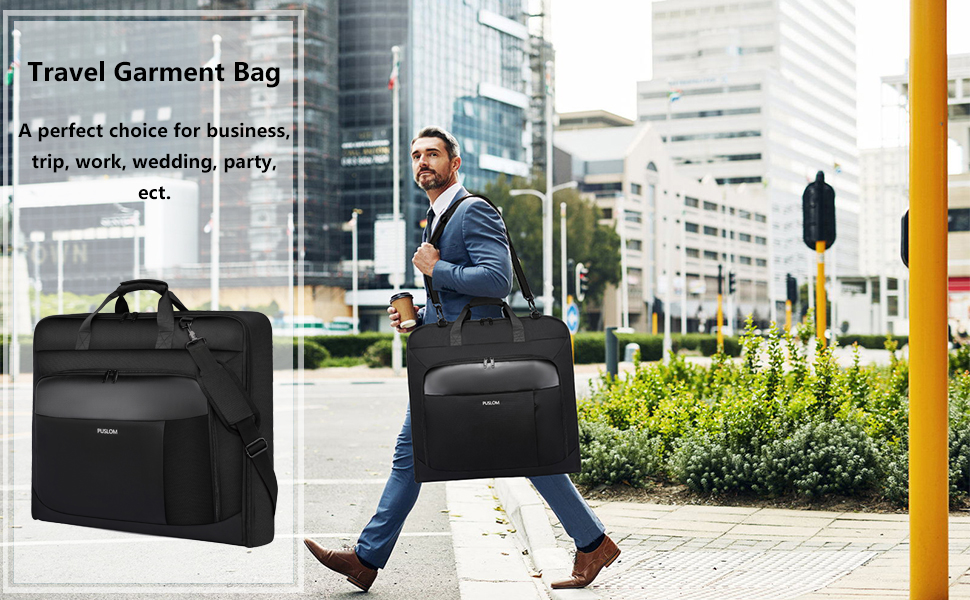
The history of garment transportation is the history of the “wardrobe trunk,” a monolithic, heavy-duty chest designed for the era of sea-faring travel. These units were immobile and relied entirely on the assistance of porters. As the mid-twentieth century ushered in the era of mass commercial aviation, the need shifted toward personal agency. The “tri-fold” garment bag emerged as the primary solution, aiming to balance the full-length suspension of a coat with the dimensional constraints of a passenger cabin.
Contemporary developments have focused on hybridizing the protective qualities of the wardrobe trunk with the agility of the modern carry-on. The integration of high-tenacity, ripstop nylon, ballistic-grade polyesters, and composite frame sheets has transformed the garment bag into a precision instrument. This evolution reflects a broader cultural shift toward “one-bag” travel, where the garment bag is no longer a separate piece of luggage, but a modular component integrated into a carry-on or a refined, dedicated carrier that adheres to stringent international dimension standards.
Conceptual Frameworks and Mental Models
Navigating the logistics of formal wear requires the application of several distinct frameworks:
The Kinetic Stability Model
This model assesses the interaction between the garment’s weight and the bag’s internal support. A stable garment bag limits the internal movement of the item. Any space within the bag is a potential site for the garment to fold against itself. Therefore, the goal is to occupy volume efficiently so that the garment is held in a state of static suspension.
The Thermal-Humidity Variance Model
Formal fabrics such as wool and silk are sensitive to their environment. A travel bag must manage the exchange of air. If a bag is completely airtight, moisture from perspiration or climate changes may be trapped, leading to mold or odor retention. The model suggests using materials that are water-resistant on the exterior but possess micro-porosity to allow for necessary breathability.
The Fold-Radius Framework
This model addresses the geometry of the garment itself. The primary cause of wrinkles in transit is exceeding the natural “fold radius” of the fabric. Any plan must ensure that the garment is folded in a way that aligns with its natural drape. For example, a heavy-weight wool blazer has a larger threshold for folding than a fine-gauge cashmere coat; the bag must be selected to accommodate these specific structural limits.
Key Categories and Hardware Variations
To develop effective travel garment bag plans, one must categorize the hardware by its structural mission.
| Category | Typical Mechanism | Structural Strength | Primary Benefit |
| Bifold/Trifold Carrier | Zippered shell | Moderate | Balance of volume/protection |
| Hybrid Suitcase | Integrated hard-shell | High (Crush-proof) | Superior protection for long-haul |
| Minimalist Sleeve | Lightweight fabric | Low | Best for short transit carry-on |
| Modular Roll-Up | Internal cylinder | Moderate | Eliminates sharp fold lines |
Realistic Decision Logic
When refining your approach, apply the following hierarchy:
-
Transit Duration: If the travel involves multiple connections and extended handling, a hard-shell hybrid is non-negotiable.
-
Garment Complexity: Tailored pieces with internal canvassing or shoulder padding require a larger fold radius and, therefore, a wider carrier.
-
Institutional Environment: If the destination is a high-level business setting, the bag must maintain its own aesthetic integrity; a crumpled garment bag is often perceived as unprofessional.
Detailed Real-World Scenarios and Operational Constraints
Scenario 1: The Short-Haul Professional
The traveler requires a suit for a morning meeting. The constraint is the “carry-on-only” rule. A minimalist, lightweight sleeve that fits inside a standard carry-on is the optimal choice. It allows the suit to remain mostly flat, with only a singular, shallow fold.
Scenario 2: The Trans-Oceanic Expedition
The traveler is moving through multiple hubs. The constraint is the high-velocity, automated baggage handling system. A rigid-frame hybrid garment bag is required to prevent the crushing forces exerted by other heavy, poorly packed suitcases.
Scenario 3: The Multi-Garment Wedding/Gala
The requirement is to transport multiple items—gowns, tuxedos, and accessories. A high-volume, book-style folding system is necessary, utilizing internal tensioning straps to ensure that each layer of fabric remains separated and undisturbed.
Planning, Cost, and Resource Dynamics
The investment in high-performance garment hardware is often a trade-off between initial cost and the maintenance of the garments themselves. A poorly protected suit requires professional pressing at the destination—a hidden, recurring cost that quickly exceeds the price of a superior bag.
Comparative Resource Dynamics
| System Level | Protection Capability | Weight | Long-Term Efficiency |
| Entry Level | Low | Low | Poor (High pressing costs) |
| Mid-Range | Moderate | Medium | Balanced |
| Professional | High | Medium-High | Excellent (Garment longevity) |
Tools, Strategies, and Support Systems
-
Garment Tensioners: Utilizing lightweight, rigid plastic inserts that hold the blazer shoulders in place is essential for maintaining structure.
-
Tissue-Interleaving: Placing acid-free tissue between layers prevents the “rubbing” that causes fabric shine and surface damage during long transit periods.
-
Dedicated Hanger Systems: Using a proprietary hanger that fits the bag’s internal docking station prevents the hanger from shifting and damaging the garment’s neckline.
-
Portable De-Wrinkling: A high-output, compact handheld steamer is the final stage of any deployment, designed to manage minor impressions that survive transit.
Risk Landscape and Failure Modes
The primary risk in any garment transit system is the “zipper-jam/burst.” When a garment bag is packed to capacity, the force on the zipper is significant. If the zipper fails, the bag loses its structural integrity immediately. Compounding this is the risk of “seam delamination”—where the internal tension straps pull away from the bag’s lining due to poor construction. A definitive strategy must include periodic inspection of these stress points.
Governance, Maintenance, and Long-Term Adaptation
Treating your garment hardware with professional care ensures a lifespan of years, not months.
-
Review Cycles: After every three major trips, conduct a full inspection of the internal frame and strap anchors.
-
Cleaning: Use a damp, non-abrasive cloth to remove surface grime; solvents should be avoided as they can degrade the DWR (Durable Water Repellent) coatings on modern nylon fabrics.
-
Adjustment Triggers: If a garment consistently arrives with a specific crease pattern, analyze the internal fold geometry and adjust the positioning within the bag accordingly.
Measurement, Tracking, and Evaluation
A serious professional treats transit as a data-driven process.
-
Leading Indicators: The time required to prepare the bag and the “readiness score” of the garment upon arrival (measured by the time required to de-wrinkle).
-
Lagging Indicators: Total weight of the loaded kit, frequency of dry-cleaning required, and the longevity of the hardware itself.
Common Misconceptions and Oversimplifications
-
“All garment bags are waterproof.” Most are only water-resistant; heavy rain requires a dedicated rain cover or a secondary sealed layer.
-
“Plastic covers provide protection.” Plastic is an insulator that traps moisture and heat, often worsening the condition of the garment.
-
“Carry-on garment bags don’t need a frame.” On the contrary, a frame is essential for carry-ons to prevent the garment from folding under its own weight when stowed overhead.
-
“Leather is the best material for garment bags.” Leather is aesthetic but heavy and susceptible to mold if stored while damp.
Ethical, Practical, and Contextual Considerations
The sartorial industry carries an immense environmental impact. Extending the life of your professional attire—and by extension, the hardware used to transport it is a foundational aspect of sustainable professional life. By choosing durable, repairable travel systems, the itinerant reduces their personal resource consumption and ensures that their professional identity remains consistent and well-maintained over a long career.
Strategic Synthesis
Developing your own travel garment bag plans is a matter of integrating material science with logical transit protocols. By viewing the garment bag as a precision-engineered extension of your wardrobe, rather than a mere container, you gain control over one of the most unpredictable variables in business travel. The goal is a system that is invisible to the user and resilient to the environment, ensuring that when you arrive, your presentation is as precise and prepared as the strategy you employed to get there.