Top Travel Pillow Plans: A Guide for Ergonomic Transit Rest
The challenge of resting in a vertical or semi-upright position during transit is one of the most persistent ergonomic hurdles in modern mobility. While human anatomy is optimized for horizontal sleep, a state where the spine is neutral, and the muscular system is fully relaxed, the constraints of aircraft cabins, train carriages, and long-haul transport vehicles impose a rigid, constrained posture. This fundamental mismatch between physiological requirements and environmental reality creates a demand for specialized support systems that go far beyond the rudimentary, air-filled cushions sold in airport kiosks.
Effective rest during transit requires a sophisticated synthesis of structural support, material science, and spatial awareness. The market is saturated with consumer-grade products that treat the problem as a minor convenience, focusing on portability at the expense of anatomical necessity. However, a serious approach to long-haul endurance requires an understanding of cervical alignment, respiratory clearance, and the thermodynamic properties of various support media. When organizations or frequent travelers engage in developing or vetting their top travel pillow plans, they are essentially architecting a solution for the mechanical stabilization of the head and neck under gravity-induced stress.
Achieving a state of meaningful rest in transit is not an aesthetic achievement but a technical one. The effectiveness of a support device is governed by the specific interplay between the user’s unique musculoskeletal structure and the mechanical resistance offered by the device itself. This guide provides an exhaustive analysis of the variables involved in creating, selecting, and maintaining systems for seated sleep, moving beyond marketing terminology to evaluate the true physical and operational requirements of high-performance transit gear.
Understanding “top travel pillow plans.”
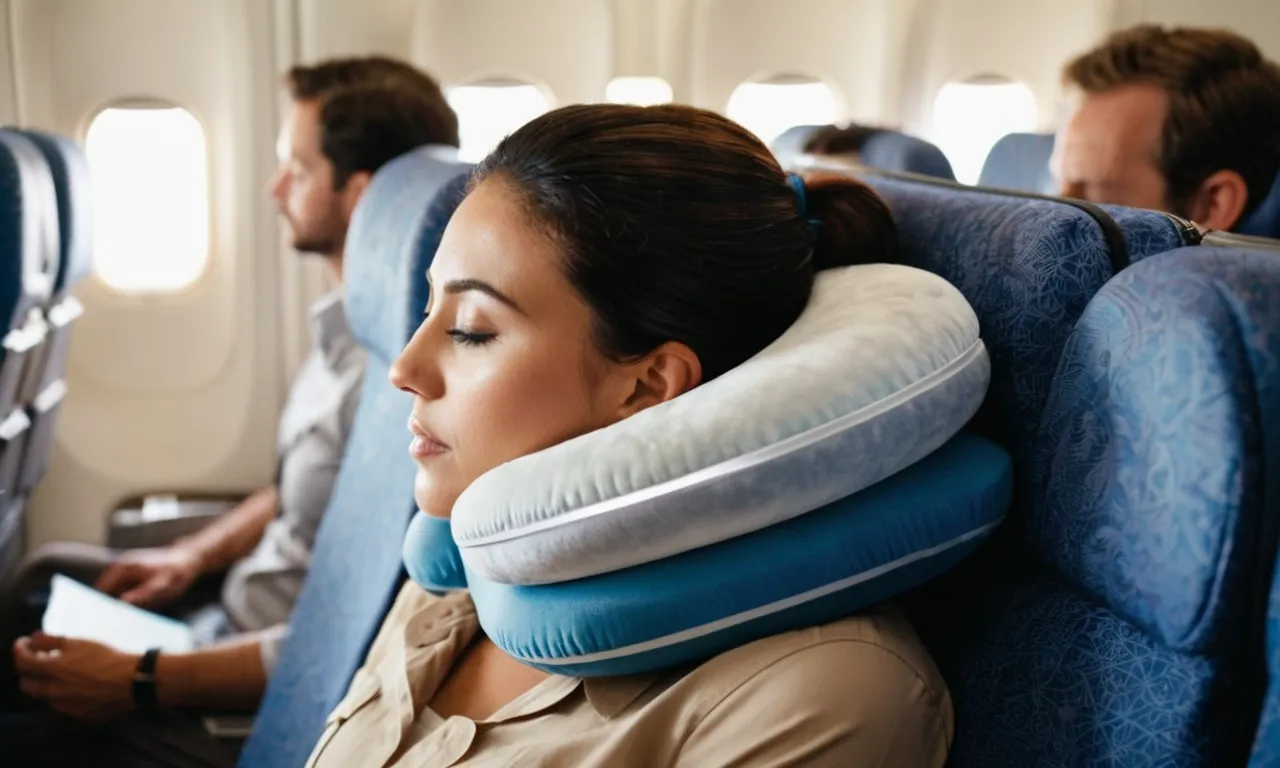
In professional and logistics circles, top travel pillow plans represent the systematic effort to standardize personal rest protocols for high-performance individuals or field teams. These plans are rarely about the pillow itself; they are about the integration of a support mechanism into a broader travel ecosystem that includes seating configurations, noise-management strategies, and thermal regulation.
A significant hurdle in the conceptualization of these plans is the tendency to equate “travel pillow” with “u-shaped neck cushion.” This oversimplification ignores the reality that a simple U-shaped cushion often exacerbates cervical strain by pushing the head forward, misaligning the vertebrae, and creating localized pressure points that impede blood flow. A robust plan, by contrast, evaluates the device as a structural brace. It acknowledges that true stability must account for chin support, lateral stabilization, and the prevention of “head drop”—a phenomenon where the relaxation of the neck muscles during the onset of sleep causes the head to lurch, subsequently disrupting the sleep cycle. The failure to account for these biomechanical realities is the primary reason most travelers abandon their gear after a single use.
Deep Contextual Background: The Physics of Seated Sleep
The evolution of seated support mirrors the evolution of the transit cabin. In the early era of aviation, seating was generous, and support was provided by oversized, soft-filled cushions. As flight density increased and cabin space reached a premium, the structural support provided by the seat itself diminished. The modern passenger is often left to contend with limited recline and headrests that are ergonomically indifferent or outright antagonistic to the anatomy.
The shift toward specialized support systems began as travelers sought to recreate the comfort of a standard pillow in an environment where horizontal space was nonexistent. Historically, this led to the development of inflatable bladders—a solution born of the necessity of space savings. However, the limitation of pneumatic support is the lack of “material memory” and dynamic response; a balloon of air under pressure lacks the ability to conform to the irregular geometry of the human jaw and shoulder. The contemporary era is defined by a move toward high-density memory foams, synthetic polymers, and rigid exoskeleton designs, each reflecting a different approach to the fundamental problem: how to arrest the motion of the head within a narrow, dynamic environment.
Conceptual Frameworks and Mental Models
To manage the complexity of seated rest, engineers and ergonomists employ specific mental models that deconstruct the transit experience.
The Cervical Support Triad
This model posits that stability relies on the intersection of three vectors: posterior support (preventing the head from falling backward or pushing forward), lateral support (preventing the head from falling to the shoulder), and anterior stabilization (securing the chin). A plan is only as effective as the weakest link. If lateral support is strong but anterior stabilization is missing, the head will still lurch forward.
The Thermodynamic-Mechanical Balance
Every support device acts as an insulator. Because the neck is a region of high heat dissipation, material selection (e.g., cooling gel layers versus synthetic insulation) is a critical variable. The mental model here balances the “compliance” of the material (how soft it is) against its thermal profile. High-compliance materials often retain too much heat, leading to discomfort that effectively negates the ergonomic benefits.
The Structural Exoskeleton vs. Passive Support
This model distinguishes between support that requires the user’s muscles to remain active (passive) versus support that replaces muscular activity entirely (exoskeleton). An exoskeleton design that clips or braces the head to the torso or seat is inherently more stable for deep sleep but often introduces psychological discomfort or “confinement anxiety.”
Key Categories and Hardware Variations
The landscape of top travel pillow plans features diverse categories, each with distinct mechanical and structural trade-offs.
| Category | Primary Mechanism | Best Used For | Primary Vulnerability |
| Pneumatic (Inflatable) | Air pressure/Displacement | Ultra-light, space-constrained | Lack of tactile comfort, potential leakage |
| High-Density Foam | Viscoelastic deformation | General comfort, cervical support | Thermal retention, bulk |
| Exoskeleton/Brace | Mechanical tension | Deep, long-haul sleep | Perceived restriction, aesthetic/social cost |
| Wraparound/Scarf | Compression/Structural tension | Leaners, minimalists | Inconsistent support depth |
| Convertible/Modular | Multi-configuration | Adaptive environments | Mechanical complexity, lost parts |
Decision Logic for Hardware Selection
Planners should utilize a decision matrix based on the duration of transit and the specific seating constraints. For a short-haul flight in a tight middle seat, a lightweight, wraparound design is typically superior. Conversely, for an intercontinental flight with a window seat, an exoskeleton or a high-density structured foam system provides the necessary lateral support to utilize the cabin wall as a stabilizing anchor.
Detailed Real-World Scenarios and Operational Constraints
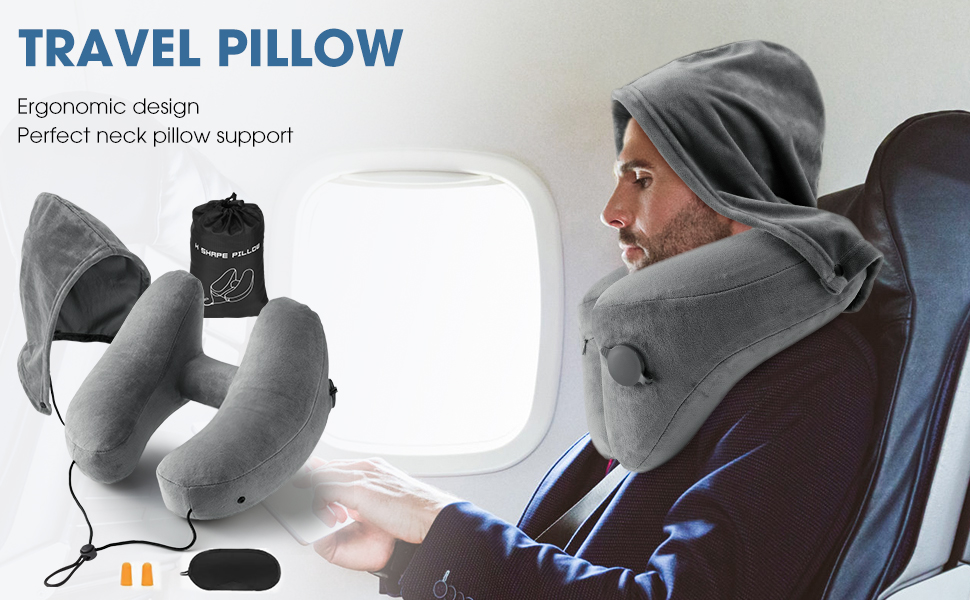
Scenario 1: Long-Haul International Deployment
A professional is scheduled for a fourteen-hour flight in economy class. The constraint is the lack of seat recline. The optimal strategy here involves a multi-layered approach: a structured cervical brace for the neck and a secondary lumbar support cushion to maintain spinal alignment, preventing the “slouch” that often forces the neck into an awkward angle.
Scenario 2: High-Activity Field Logistics
An operator is moving between field sites in off-road vehicles, where vibration is a constant. The requirement here is not just stability, but damping. A system that utilizes viscoelastic materials to absorb high-frequency vibrations is essential to prevent chronic neck fatigue throughout the transit day.
Scenario 3: The “Window-Seat” Anchor Strategy
In a window seat, the fuselage itself becomes part of the support system. The operational strategy shifts to utilizing a thin, firm lateral cushion that bridges the gap between the head and the cabin wall, creating a stable platform that eliminates the need for complex bracing.
Planning, Cost, and Resource Dynamics
The implementation of top travel pillow plans involves calculating the trade-off between portability and performance. Organizations often find that providing a standardized, high-quality kit results in lower fatigue-related errors during field operations.
Resource Allocation Table
| Resource Tier | Cost Expectation | Maintenance Requirement | Performance Level |
| Basic (Pneumatic) | $15–$30 | Low (hygiene focused) | Moderate (short term) |
| Standard (Memory Foam) | $40–$80 | Moderate (covers, density checks) | High (long term) |
| Enterprise (Exoskeleton) | $120–$200+ | High (mechanical inspection) | Maximum (performance) |
Tools, Strategies, and Support Systems
A truly effective support strategy integrates the physical pillow with auxiliary tools.
-
Compression Garments: Reduce fluid retention in the extremities, which improves overall comfort and reduces restless leg syndrome.
-
Acoustic Isolation: High-fidelity noise-canceling systems are integral; auditory stimuli often trigger micro-awakenings that break the sleep cycle.
-
Luminous Management: Eye masks should be evaluated for “nasal bridge seal,” which prevents light leakage that degrades deep REM cycles.
-
Lumbar Integration: A pillow plan is incomplete without addressing the lower spine, which dictates the posture of the cervical spine.
Risk Landscape and Compounding Failure Modes
The failure of a support system often compounds. A primary failure, the collapse of the lateral support, leads to a secondary failure: the awakening of the user. The psychological cost of this repeated awakening (the “arousal response”) is significant, leading to sleep fragmentation. Risk managers should note that the most dangerous failure mode is the “strangulation risk” or “occlusion risk” inherent in poorly designed wraparound or brace systems that place pressure on the carotid artery or impede the airway, particularly in users with undiagnosed sleep apnea.
Governance, Maintenance, and Long-Term Adaptation
To maintain the efficacy of top travel pillow plans, organizations must treat their inventory as active equipment.
-
Monitoring: Annual reviews of material integrity (testing for permanent compression set in foams).
-
Hygiene Cycles: Rigorous sanitization protocols, particularly for units that contact skin for extended periods in high-humidity transit environments.
-
Adjustment Triggers: Updating hardware configurations based on changes in travel patterns (e.g., moving from short-haul to long-haul, or shifting to different aircraft types).
Measurement, Tracking, and Evaluation
Evaluation must rely on qualitative reports of “sleep quality” supplemented by objective metrics.
-
Leading Indicators: Duration of undisturbed seated periods, pre-trip ergonomic fit-testing.
-
Lagging Indicators: Reported fatigue scores post-transit, hardware replacement frequency.
Common Misconceptions and Oversimplifications
-
The “One-Size-Fits-All” Fallacy: Anatomical variability (neck length, shoulder breadth) makes a single pillow design insufficient for a diverse user base.
-
The Recline Assumption: Many assume that the pillow will provide enough support even if the seat is perfectly upright; this is physically impossible for deep sleep.
-
The Material Myth: Memory foam is not a panacea; its effectiveness is dependent on the ambient temperature of the cabin.
-
The “Travel Pillow = Convenience” Bias: Travel pillows are actually specialized medical-grade braces that happen to be marketed for comfort.
Ethical, Practical, and Contextual Considerations
The environmental impact of disposable travel pillows, mostly low-grade plastic and synthetic foam, is significant. Developing top travel pillow plans necessitates a focus on modular, repairable, and sustainable materials. Practitioners should also consider the ethics of “forced rest” in high-pressure field operations, ensuring that support gear does not become a tool for pushing personnel beyond safe alertness limits.
Strategic Synthesis
The pursuit of rest in a seated, upright environment remains one of the most demanding tasks for the frequent traveler. It requires moving beyond the consumerist view of the travel pillow as an accessory and toward an understanding of it as a structural component in a mobile life. By emphasizing anatomical alignment, thermal management, and a systematic approach to hardware selection, individuals and organizations can create resilient protocols for rest. The most successful top travel pillow plans are those that acknowledge the inherent hostility of the transit environment and respond with engineered precision, prioritizing stability and cervical health above convenience and aesthetic appeal.